-
Looking For Happiness In All The Wrong Places

A key to happiness is realizing that it is not a destination but a process that involves effort. Any action that requires effort is distressing by nature. My mind often tells me that I would rather sit on the couch and watch Netflix rather than go outside and enjoy the day, exercise, play with my kids, etc. Yet, I always “feel better” when I engage in activities that bring me joy and a sense of mastery.
Type in your google search, “How to be happy” and watch the barrage of articles (including this one) claiming to possess the key to happiness. You will see things like nature walk, exercise, diet, sleep, connection, vulnerability, forgiveness, gratitude, competency, autonomy, etc. These are all wonderful aspirations that require intention and effort. If I am not willing to engage in the aversive nature of effort, I will never be happy.
I spent the majority of my career trying to find the perfect intervention, the perfect way to help people (and myself), whether with addiction issues or mental health struggles. I have researched CBT, ACT, DBT, psychoanalysis, hypnosis, psychopharmacology, spirituality, earthing, holistic, faith-based approaches, etc. I believe the truth is that all of these (and many more) work just fine but don’t make a bit of difference if a person is not willing to do them. Maybe the point is instead of trying to find the best intervention, I must establish and nurture willingness to engage in the aversive effort required to seek them.
I have also experienced the flip side of that. Plagued by an internal sense of “not being good enough”, I overcompensated in a relentless effort to seek happiness in things that would, unbeknownst to me, never produce it. These things were usually in the form for immediately gratifying objects, which, once achieved, immediately fade and produce more wanting. The attempt to satisfy an internal sense of inadequacy with external objects was doomed to failure. Yet, my mind continues to defy and fight this reality.
I love the practice of Radical Acceptance, a skill that allows me to stop fighting. My default is often to get into a power struggle with reality (inside and out) when things don’t go according to my plan of how things should be. I seek to control things I do not have any control of, leading to increased anxiety, shame, depression, and resentment.
This simple practice affords me the ability to loosen my grip on things I can’t control and compassionately accept the reality in front of me, even when it is painful. Often, I find that true suffering doesn’t come from the things in life that are painful but from my intolerance of them. If I can change my relationship to reality (inside and out) through radical acceptance, I can find peace in any circumstance.
I heard a theory that most if not all of psychopathology comes from the suppression of emotion. I learn to label certain (painful) emotions as “bad”, therefore becoming a problem for my mind to solve. I exert a tremendous amount of futile mental energy trying to solve unsolvable emotions, leading to increased tension and anxiety. By accepting painful emotions and being curious about what they are trying to tell me, I can alleviate much suffering in my life.
So, a commitment to engage in aversive action consistent with what matters to me while loosening my grip on controlling the results seems to be a workable formula for contentment. This often feels like threading a needle and I find that my default reaction to life is often counter to this. I must accept that I am not perfect while accepting that I want to be.
-
Hello World!
Welcome to WordPress! This is your first post. Edit or delete it to take the first step in your blogging journey.
-
The Struggle is the Blessing
A wise man once told me “The struggle is the blessing“. My first thought was “shit, you don’t know what you’re talking about”. At the point in time when those words were uttered to me, I was in the midst of climbing out of a pretty deep, dark hole that I found myself in. Years of suffering with addiction and mental illness had reduced my life to a singular function… escaping the painful reality of my current existence.
It didn’t start out that way. At first, it was fun and exhilarating. Something that attracted me, almost like the forbidden fruit phenomenon. I can remember as a kid thinking to myself “I will never do that (abuse drugs and alcohol)”. But there was something pulling me towards that lifestyle. It started slow and harmless enough and by the time I realized I’d crossed the line it was too late. I was pickled, so to speak. And once you become a pickle, you can’t go back to being a cucumber. But what I didn’t realize was that this pickle could go on to be something far more delicious than a cucumber.
There is a phenomenon known as post traumatic growth. The idea is that going through painful experiences can actually place us on an upward trajectory that will take us far beyond anywhere we could’ve imagined prior to the painful experience. There are many pithy clichés that capture this idea, “no pain, no gain “, “you have to crawl before you walk “, and “the struggle is the blessing”.
Painful experiences are by nature disturbing. The point is not to say that these things aren’t disturbing, however, there exists an opportunity on the other side to change our relationship to pain and leverage it to make us stronger. But this is a choice. We get to choose our relationship to the painful experiences in our life and whether they will make or break us. I was not aware that I was making this choice at the time, all I was trying to do is the next right thing and follow the suggestions of those walking the path ahead of me.
As I write this post, I am sitting in a home that I own, with two children resting in their bed, happy and healthy. A wife who loves me, a career that has placed me in a position of leadership, a graduate degree, and having just started my own company. These are small yet incredibly valuable pieces of my life today and every bit of it comes as a result of me being in recovery.
I often tell the story of my keys. I have a pretty massive key ring today. It’s hard to keep them in my pocket. I have two car keys, three work keys, a house key, keys to my parents and in-laws house, etc. I remember a time where I had no keys. I had been evicted from my apartment, my car sold, and my family had changed the locks on their homes because of the destruction I had created. I remember sitting in a treatment program with no keys and what it felt like to be reduced to a state of infancy as a grown man.
This experience gives me a new pair of glasses to view my massive key ring. I have a far greater appreciation today and gratitude for my keys. With gratitude comes valuing things in a way that makes life sweeter, something I would never have had had I not lost my keys to begin with. Now I see, the struggle is the blessing.
To return to this idea of “the destruction I had created”, sometimes you have to have destruction in order to have construction. The Yin-Yang, an ancient Taoist symbol, reflects this idea of the interrelationship between light and dark. These states more than co-exist, they rely on one another and are actually imbedded in one another. Yet, we have been conditioned to relentlessly seek to eradicate the dark from our lives so we can bathe in the light. This has deleterious consequences that, in my view, have contributed to the increase in mental health and substance abuse problems. I know it did for me. I chased the light with everything in me and the more I chased it, the more it eluded me because I failed to realize that in order grasp the light, I had to welcome the dark.
Acceptance and Commitment Therapy calls this place creative hopelessness, which suggests that when we connect with the hopelessness of our futile efforts to avoid the dark, a very painful and hopeless realization, we are granted the opportunity to create something beyond our wildest dreams. In other words, the struggle is the blessing.
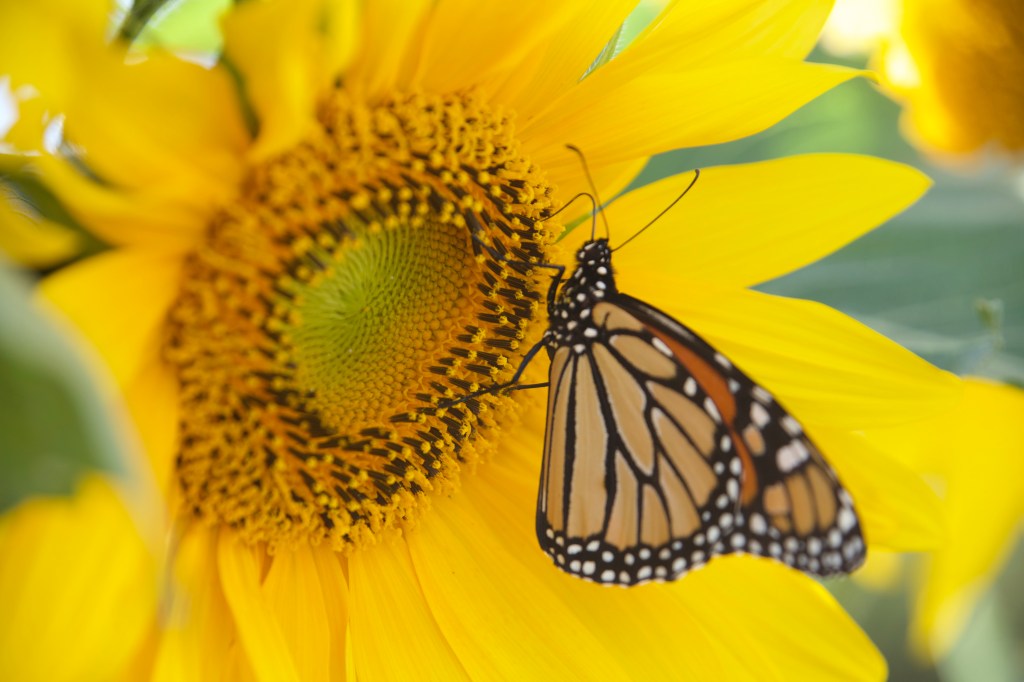
I will leave you with the story of the butterfly. Before becoming a butterfly, a caterpillar must go through hell. Trudging along the branches, vulnerable to predators and the elements with very little ability to protect herself. Arriving in the cocoon, a caterpillar must struggle intensely to become a butterfly. She must struggle against the walls of the cocoon with all her might in order to strengthen her wings so that one day she may emerge into the light a radiant butterfly able to fly. If one were to cut her from the cocoon before she is ready, she would be too weak and would surely perish. She must struggle in order to become what she was meant to be.
-
Subscribe
Subscribed
Already have a WordPress.com account? Log in now.
 Autumn's Harbor